Retro 90s Summer Y2K Digital Paper: Integrating Nostalgic Assets into Creative Workflows
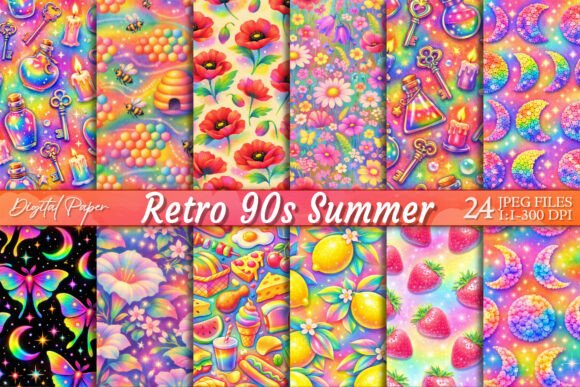
The resurgence of Y2K aesthetics has moved beyond fleeting social media trends to become a staple in modern graphic design, stationery production, and digital planning. For creators, marketers, and educators, the challenge is no longer finding retro inspiration but sourcing high-quality assets that function reliably across professional workflows. Retro 90s Summer Y2K Digital Paper serves as a foundational texture layer, bridging the gap between nostalgic visual language and contemporary design requirements. This asset pack, featuring neon butterflies, rainbow moons, strawberries, lemons, flowers, magical potions, and colorful summer patterns, provides a versatile toolkit for projects requiring bold, saturated visuals without the technical limitations often associated with vintage scans.
Understanding where this digital paper fits within a broader creative process is essential for maximizing its utility. It is not merely a background; it is a structural element that dictates color palettes, informs typography choices, and establishes the emotional tone of a project before detailed content creation begins. Whether you are designing printable party decor, building a digital planner ecosystem, or creating educational materials, integrating these textures early in the planning phase ensures visual consistency and reduces revision cycles later in production.
Technical Specifications and Workflow Compatibility
Before incorporating any digital asset into a professional pipeline, verifying technical specifications against output requirements is a critical quality control step. This Retro 90s Summer Y2K Digital Paper pack includes 24 JPG files at 300 DPI resolution with dimensions of 4096×4096 px. These parameters are significant for several practical reasons.
The 4096×4096 px square format exceeds standard print sizes like A4 or US Letter, providing ample bleed area for trimming and allowing for flexible cropping in digital layouts. For digital planners and tablet backgrounds, this resolution ensures crisp rendering on high-density Retina displays without pixelation. The 300 DPI standard guarantees that physical outputs—from scrapbook pages to large-format party banners—maintain sharpness and color fidelity. When working with these files, organize them immediately upon download. Rename files descriptively (e.g., "Y2K_Neon_Butterfly_Pink.jpg" rather than "IMG_001.jpg") and tag them in your digital asset management system. This preparation reduces friction during active design sessions, allowing you to locate specific patterns like lemon prints or magical potions based on project needs rather than browsing generic filenames.
Pre-Production Planning and Mood Boarding
Effective use of patterned digital paper begins before opening design software. During the concept development phase, these assets serve as rapid prototyping tools. Instead of spending hours generating custom gradients or illustrating retro motifs from scratch, use the paper pack to test color harmonies and thematic directions. For example, if designing a summer camp invitation suite, placing the strawberry and lemon patterns alongside potential font pairings allows for immediate assessment of legibility and vibe alignment.
This stage is also where you determine the hierarchy of visual elements. Bold Y2K patterns can easily overwhelm text or focal images. By testing layouts early, you can decide whether a specific pattern should be used at full opacity as a primary background, reduced to 50% as a subtle texture, or masked into specific shapes to create frames. This decision-making process prevents the common issue of retrofitting designs to accommodate busy backgrounds, streamlining the transition from concept to execution.
Implementation Across Physical and Digital Mediums
The versatility of Retro 90s Summer Y2K Digital Paper lies in its adaptability across different mediums. However, implementation strategies differ significantly between print and digital deliverables.
Print Production and Stationery
For scrapbooking, junk journals, and physical invitations, color management is paramount. Neon colors characteristic of the 90s aesthetic can shift unpredictably between screen and print. Always perform test prints on your intended paper stock before finalizing layouts. Matte papers tend to absorb ink, potentially muting vibrant pinks and greens, while glossy stocks enhance saturation but may introduce glare. When designing for commercial sale or client delivery, ensure safe zones account for printer margins. The 4096px dimension allows you to center designs with confidence, but always verify trim lines against your specific printing equipment or service provider’s templates.
Digital Planning and Screen-Based Design
In digital environments like GoodNotes, Notability, or Canva, file size impacts performance. While 4096×4096 px at 300 DPI is ideal for master files, consider creating optimized derivatives for daily use. Reducing resolution to 72-150 DPI for screen-only assets maintains visual quality while improving app responsiveness and reducing cloud storage consumption. For digital stickers and planner covers, utilize the PNG conversion workflow: isolate specific elements like neon butterflies or rainbow moons by removing the background, then export as transparent PNGs. This transforms static paper sheets into modular design components that interact dynamically with user-generated content.
Enhancing DIY Projects and Educational Materials
Beyond commercial design, these assets streamline personal and educational projects. For kids’ craft projects and classroom activities, the bold, recognizable imagery supports engagement and thematic learning. Teachers creating summer-themed worksheets or reward charts can use the colorful summer patterns to differentiate content sections visually. The high contrast aids readability for younger audiences while maintaining an age-appropriate aesthetic.
For DIY enthusiasts hosting events, consistency across touchpoints elevates the perceived quality of the experience. Use the same paper set for invitations, cupcake toppers, banner garlands, and thank-you cards. This unified approach creates a cohesive brand identity for personal celebrations. Because the files are digital, you can scale elements appropriately for each application without losing quality, ensuring the neon butterflies look equally intentional on a 2-inch sticker and a 12-inch wall decal.
Post-Production Organization and Asset Longevity
The value of a digital paper pack extends beyond individual projects when integrated into a sustainable asset library. After completing a project, archive modified versions alongside master files. If you created custom masks, color-adjusted variants, or extracted elements, save these as reusable resources. Document which patterns performed best for specific applications; noting that the magical potion texture works exceptionally well as a low-opacity overlay for dark mode planners saves future troubleshooting time.
Consider licensing and usage rights when incorporating these assets into products for resale. Understanding whether the pack allows for commercial use in end products versus requiring flattening or significant modification protects your business legally. Clear documentation of asset sources and license terms within your project files ensures compliance and simplifies audits if questions arise later.
Strategic Integration for Consistent Branding
For entrepreneurs and small business owners targeting Gen Z and Millennial demographics, Y2K aesthetics signal cultural awareness and relevance. However, trend adoption must align with brand identity. Use Retro 90s Summer Y2K Digital Paper strategically rather than universally. Perhaps limit usage to seasonal campaigns, limited-edition product launches, or specific content pillars where nostalgic energy reinforces messaging. This selective application prevents aesthetic fatigue and maintains brand recognition across diverse touchpoints.
When combining these patterns with existing brand elements, establish clear guidelines. Define acceptable color overlays, opacity ranges, and pairing rules for logos and body copy. Creating a mini style guide specifically for retro-themed projects ensures team members and collaborators apply assets consistently, preserving brand integrity even when experimenting with bold visual trends.
Optimizing Creative Efficiency Through Texture
Ultimately, digital paper functions as an efficiency multiplier. Building complex retro textures from scratch requires specialized illustration skills and significant time investment. Leveraging pre-made, high-resolution assets like this pack allows creators to focus cognitive resources on layout, messaging, and user experience rather than surface decoration. The 24-file variety provides sufficient range to avoid repetitive looks across multi-page documents or product lines while maintaining thematic coherence.
By approaching Retro 90s Summer Y2K Digital Paper as a systematic resource rather than decorative afterthought, professionals and hobbyists alike can achieve polished, nostalgic results with greater speed and reliability. The key lies in respecting technical specifications, planning integration points early, and maintaining organized workflows that extend the asset’s usefulness far beyond a single summer season. Whether enhancing a digital planner’s usability, elevating party decor, or adding tactile warmth to printed stationery, these vibrant backgrounds provide the structural foundation necessary for successful creative execution in a trend-conscious marketplace.