The Strategic Value of Vintage Butterflies and Moths Ephemera in Modern Digital Crafting
In the evolving landscape of digital design and physical paper crafting, the intersection of nostalgia and technological precision has created a unique market niche. For professionals, creators, and entrepreneurs operating within the stationery, journaling, and mixed media sectors, sourcing high-quality assets is not merely an aesthetic choice but a business imperative. Vintage Butterflies and Moths Ephemera represents more than just decorative imagery; it embodies a shift toward hybrid workflows where historical charm meets modern production standards. As the demand for tactile, authentic-feeling digital products grows, understanding the utility, technical specifications, and commercial application of these assets becomes essential for maintaining a competitive edge in the creative marketplace.
Defining the Asset: Technical Precision Meets Historical Aesthetic
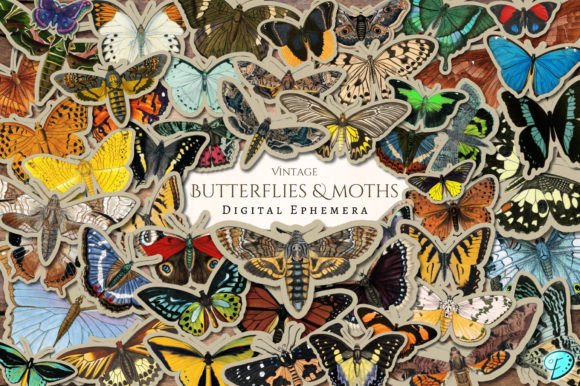
To fully leverage Vintage Butterflies and Moths Ephemera, one must first understand the specific technical parameters that distinguish professional-grade assets from generic clip art. This particular digital pack is engineered for versatility across both digital and analog platforms. The collection includes 100 distinct vintage fussy cuts, each rendered at 1000 × 1000 pixels with a resolution of 300dpi. This specification is critical for industry professionals. While web graphics often suffice at 72dpi, print-ready ephemera requires the density of 300dpi to ensure crisp edges and vibrant color reproduction when transferred to physical media.
The format itself—transparent PNGs—is the industry standard for layering. Unlike JPEGs, which flatten images against a white background, transparent PNGs allow creators to integrate these lepidopteran illustrations seamlessly into complex compositions without tedious background removal. Furthermore, the explicit compatibility with Cricut machines bridges the gap between digital design and automated fabrication. For entrepreneurs running small-batch stationery businesses or custom gift wrap services, this compatibility streamlines production, allowing for precise cutting of intricate wing patterns that would be prohibitively time-consuming to execute by hand at scale.
Market Trends: The Resurgence of Tactile Authenticity
The current surge in interest surrounding vintage natural history ephemera is not accidental; it is a direct response to broader consumer trends favoring authenticity and sustainability. In an era dominated by AI-generated perfection and sterile minimalism, there is a palpable market correction toward the imperfect, the historical, and the handcrafted. Vintage butterflies and moths carry an inherent narrative weight that resonates with consumers seeking connection and grounding.
For marketers and product designers, this trend offers a strategic advantage. Products incorporating these elements tap into the "cottagecore" and "dark academia" aesthetics that continue to dominate social media algorithms and e-commerce platforms. However, beyond mere trend-chasing, these assets serve a functional role in the booming junk journal and scrapbooking industries. These communities value variety and uniqueness. A digital pack offering 100 different designs provides the necessary volume to create cohesive yet non-repetitive product lines, whether for digital planner stickers, printable card kits, or physical decoupage projects.
Workflow Integration: From Screen to Physical Product
The true value of this ephemera collection lies in its adaptability to diverse professional workflows. The transition from digital file to finished product requires assets that perform reliably across different mediums. Here, the distinction between digital-only use and print-and-cut capability becomes paramount.
- Junk Journals and Scrapbooking: Creators can print these 300dpi images on matte or textured paper to mimic the feel of antique book plates. The transparent backgrounds allow for overlapping compositions that replicate the layered look of traditional collage without the bulk of multiple paper layers.
- Commercial Stationery Design: Graphic designers can utilize these high-resolution PNGs as focal points in greeting cards, tags, and envelopes. Because they are pre-fussed (pre-cut), they significantly reduce production time compared to scanning and cleaning physical antiques.
- Digital Planning and Content Creation: For those in the digital space, these assets serve as premium embellishments for iPad planners or social media templates. The 1000px dimension is optimized for screen clarity without creating excessive file bloat, ensuring smooth performance in apps like GoodNotes or Canva.
- Mixed Media Art: Artists blending hand-drawn illustrations with found imagery can use these digitally enhanced visuals as a base layer, adding paint, ink, or texture over the top to create proprietary mixed media pieces.
This multi-platform utility transforms a single purchase into a comprehensive resource library, maximizing return on investment for freelancers and small business owners.
Navigating Technical Nuances and File Management
Professional asset management extends beyond creative application to include technical proficiency. When working with cross-platform digital packs, understanding file architecture prevents workflow disruptions. This collection includes MacOSX files within the zip archive, a common source of confusion for Windows users. Files prefixed with "._" are metadata files generated by Apple systems and are not actual image assets. Windows users should disregard these to avoid the false impression of missing content.
Awareness of these technical details is part of professional digital literacy. It ensures that creators spend their time designing rather than troubleshooting. Furthermore, the assurance that all 100 files are present and accounted for builds trust between the creator and the end-user. For sellers bundling these assets into larger kits or using them in client work, verifying file integrity upon download is a best practice that safeguards project timelines.
Commercial Ethics and Licensing Considerations
In the digital goods marketplace, intellectual property rights and licensing terms are as important as the visual quality of the assets. Professionals must navigate these boundaries with integrity to maintain sustainable business practices. The licensing for this Vintage Butterflies and Moths Ephemera pack explicitly prohibits re-selling the products "as is" or in physical format without considerable alteration. This clause protects the original creator’s labor while simultaneously encouraging transformative creativity.
For entrepreneurs, this means the value proposition lies in integration, not redistribution. You cannot simply print these butterflies and sell them as standalone stickers. However, you can incorporate them into a unique greeting card design, a bespoke journal page layout, or a mixed media canvas where they form part of a larger, original composition. This distinction aligns with broader industry standards regarding derivative works. It pushes the market toward innovation rather than saturation, ensuring that consumers receive genuine value through new, creative applications rather than recycled commodities.
Adhering to these guidelines also mitigates legal risk. Understanding the difference between personal use, commercial incorporation, and prohibited resale is a fundamental skill for any freelancer or creative entrepreneur. When in doubt, direct communication with the asset creator is recommended to clarify usage rights, fostering a transparent and respectful creative ecosystem.
The Role of Mixed Media in Contemporary Design
Finally, it is worth noting the compositional nature of these assets. They are described as a blend of hand-drawn illustrations, mixed media, found imagery, generated elements, and digitally enhanced visuals. This hybrid origin story is significant. Purely AI-generated art often faces criticism for lacking soul or consistency, while purely scanned antiques may suffer from degradation or limited resolution. By combining these methodologies, the resulting ephemera achieves a balance that satisfies both aesthetic purists and technical pragmatists.
This approach mirrors the trajectory of modern design itself. We are moving away from binary categorizations of "digital vs. analog" or "human vs. machine." Instead, the most successful creative products leverage the strengths of multiple disciplines. The hand-drawn elements provide organic imperfection; the found imagery anchors the piece in history; the digital enhancement ensures usability; and the generated elements fill gaps to create a complete, cohesive set. For the professional user, this means acquiring assets that are not just pictures of bugs, but sophisticated design tools built for the realities of contemporary production.
Conclusion: Investing in Versatile Creative Infrastructure
Ultimately, acquiring a comprehensive pack of Vintage Butterflies and Moths Ephemera is an investment in creative infrastructure. It addresses the practical needs of high-resolution printing and machine cutting while satisfying the market's emotional desire for vintage authenticity. For professionals, marketers, and enthusiasts alike, success depends on having reliable, versatile, and ethically sourced materials at their fingertips.
As the boundaries between digital and physical crafting continue to blur, assets that bridge this divide will remain indispensable. Whether you are designing a luxury stationery line, curating a digital planner shop, or exploring mixed media artistry, the ability to seamlessly integrate high-quality, historically inspired elements into your workflow is what separates hobbyist output from professional results. By understanding the technical specs, respecting licensing terms, and leveraging current market trends, creators can transform these delicate digital specimens into robust, profitable, and meaningful creative endeavors.