Evaluating Scottish Tartan Plaid Seamless Patterns for Design Projects
The Scottish tartan plaid seamless pattern represents a specific intersection of cultural heritage and modern digital utility. For designers, crafters, and print-on-demand sellers, these assets serve as more than mere decoration; they function as foundational elements that convey tradition, warmth, and rustic authenticity. When evaluating a Scottish Tartan Plaid Seamless Pattern Digital Paper Bundle, it is essential to understand both the aesthetic lineage of the design and the technical specifications required for professional application. This evaluation explores the practical considerations, benefits, and limitations of integrating traditional woven-inspired textures into contemporary creative workflows.
Defining the Asset: Heritage Meets Digital Utility
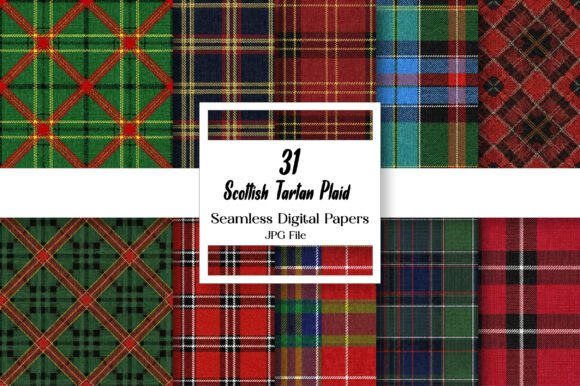
A Scottish tartan plaid seamless pattern is a digital reproduction of traditional woven wool textiles, characterized by intersecting horizontal and vertical bands in multiple colors. Historically associated with Highland clans and regional identities, tartan carries significant cultural weight. In a digital context, however, the focus shifts to visual texture and repeatability. A true seamless pattern allows the design to tile infinitely without visible breaks or misalignments at the edges. This technical characteristic distinguishes a professional-grade digital paper from a standard image file.
These bundles typically feature high-resolution JPG files at 300 DPI, ensuring that the intricate details of the weave remain crisp when printed. The color palettes often adhere to heritage standards, utilizing rich reds, deep greens, navy blues, and warm browns. Understanding this definition helps users distinguish between authentic, historically inspired designs and generic check patterns that may lack the depth and complexity required for serious heritage-themed projects.
Primary Applications and Use Cases
The versatility of tartan lies in its ability to function as both a primary focal point and a subtle background texture. Evaluating whether this asset fits your current project requires matching the pattern’s intensity with your intended medium.
- Paper Crafting and Stationery: For scrapbooking, junk journals, and planner covers, tartan provides an immediate sense of nostalgia and tactile warmth. The woven texture mimics physical fabric, adding perceived value to paper goods.
- Fabric and Apparel Design: Because these patterns are seamless, they are suitable for textile printing and sublimation. They work effectively on tote bags, t-shirts, and home decor items where continuous coverage is necessary.
- Seasonal and Rustic Branding: Tartan is intrinsically linked to autumn, winter, and holiday aesthetics. It is a strong fit for seasonal packaging, greeting cards, and social media graphics aiming to evoke farmhouse or countryside vibes.
- Product Mockups and Packaging: The structured geometry of plaid offers excellent contrast for product photography backgrounds, particularly for artisanal goods, food products, or heritage brands.
Benefits of Digital Tartan Assets
Selecting a digital bundle over sourcing physical fabric or creating patterns from scratch offers distinct advantages in efficiency and consistency. High-quality digital papers eliminate the need for photographing real textiles, which can introduce lighting inconsistencies, shadows, and perspective distortion. A professionally created seamless pattern guarantees uniform color and scale across all outputs.
Furthermore, digital assets provide scalability. While physical tartan is limited by the width of the loom, a 300 DPI seamless file can be scaled to cover large format prints or resized for small labels without losing integrity. The inclusion of traditional Scottish-inspired color palettes also saves time on color grading, providing pre-harmonized schemes that resonate with audiences familiar with classic tartan aesthetics. For print-on-demand sellers, this reliability reduces the risk of customer returns due to poor print quality or pattern mismatching.
Technical Considerations and Tradeoffs
Despite their utility, digital tartan patterns present specific challenges that must be weighed during the selection process. One primary consideration is file format. Most bundles offer JPG files, which are universally compatible but do not support transparency. If your design requires layering the tartan over a non-white background or masking it into complex shapes, you may need additional editing software or vector alternatives.
Resolution is another critical factor. While 300 DPI is the industry standard for print, users must verify the physical dimensions of the file. A 300 DPI image that is only 4x4 inches will pixelate if stretched to cover a blanket. Conversely, using an excessively large file for web graphics can slow down load times. Users must balance file size with intended output dimensions.
Additionally, there is the tradeoff between authenticity and trendiness. Highly accurate clan-specific tartans carry historical significance that knowledgeable audiences may scrutinize. Generic "fashion tartans" avoid this scrutiny but may lack the depth desired for heritage-focused collections. Buyers should determine if their audience values historical accuracy or general aesthetic appeal before selecting a specific bundle.
When Alternatives May Be Preferable
While Scottish tartan plaid seamless patterns are versatile, they are not the optimal solution for every scenario. Understanding when to look elsewhere prevents wasted resources and design misalignment.
- Modern Minimalist Aesthetics: Tartan is inherently busy and textured. If a project demands clean negative space or sleek, futuristic lines, solid colors or subtle gradients are superior choices.
- High-Contrast Typography: Complex plaid patterns can reduce text readability. If legibility is paramount and overlaying solid blocks is not an option, simpler geometric patterns or low-opacity textures may perform better.
- Cultural Sensitivity Concerns: If a project involves specific Scottish cultural representation, using a generic digital pattern without understanding its origins could be perceived as inauthentic. In such cases, consulting historical archives or licensing official clan registries may be necessary.
- Vector-Based Scalability Needs: For designs requiring infinite resizing without any quality loss (such as billboards or vehicle wraps), raster JPGs have limits. Vector-based plaid patterns, though less common in digital paper bundles, offer mathematical precision that raster images cannot match.
Making an Informed Selection
To determine if a Scottish Tartan Plaid Seamless Pattern Digital Paper Bundle aligns with your goals, evaluate the asset against three criteria: technical adequacy, aesthetic resonance, and licensing flexibility. First, confirm that the resolution and tiling meet your production requirements. Test the seamlessness by placing two copies side-by-side in your design software before purchase if previews allow.
Second, assess the color palette against your existing brand guidelines or project mood board. Heritage colors are beautiful but specific; ensure they complement rather than clash with your other design elements. Finally, review the license terms carefully. Commercial use for physical products often differs from digital end-products. Ensuring the license covers your specific monetization strategy protects your business from future legal complications.
Ultimately, these digital papers bridge the gap between traditional craftsmanship and modern production. By approaching the selection process with a clear understanding of technical specs and aesthetic implications, creators can leverage the enduring appeal of Scottish tartan to produce work that feels both timeless and professionally executed.